

Reclining at table
A reflection on the symbolism and spirituality of the table: at the Last Supper, at the altar, and at Thanksgiving dinner.

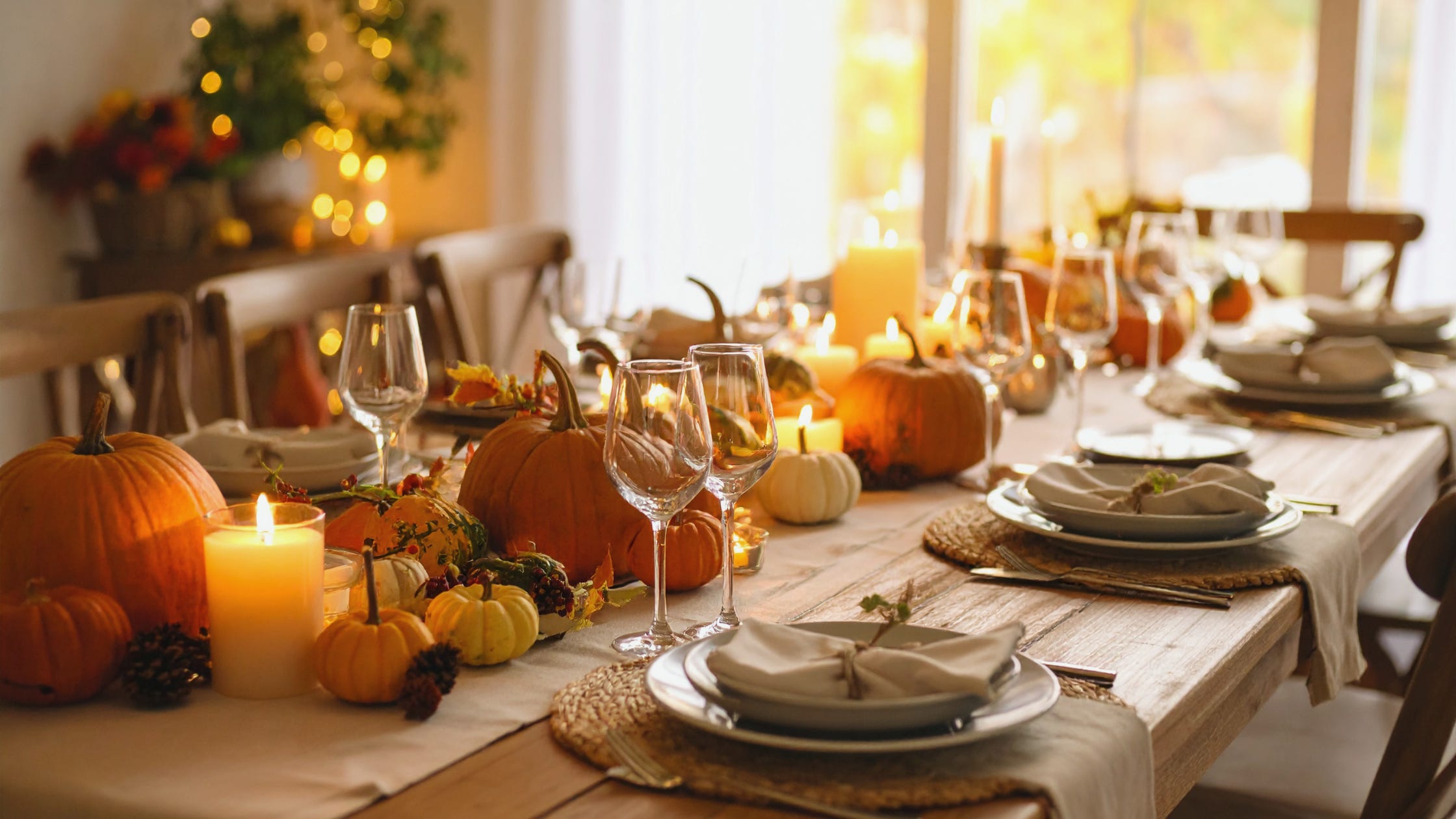
My parents found our dining table on Craigslist. I think there’s something special about a second-hand table that has already held many hot meals, been shaken from laughter and friendly chatter, and been the centerpiece of nostalgic gatherings. I wonder how its previous owners spent Thanksgiving, perhaps reclining against the ornate chair backs, dropping crumbs of pumpkin pie crust on the tabletop, asking their grandchildren about school. Taking this table home meant adding to a chain of love.
For many years, my job on Thanksgiving morning has been to set the table with all festivity. Mom trusts me to dust off her prized china plates and cups, reminding me where every piece goes. Soon, the tablecloth is barely visible beneath a turkey (usually dry), bread rolls (my favorite part), vegetables (nearly forgotten), an assortment of potatoes (Samwise Gamgee would be proud), and other scrumptious dishes. Not to mention the homemade pumpkin pie and cake. More importantly, the place settings get bumped, messed, and admired by a gathering of loved ones.
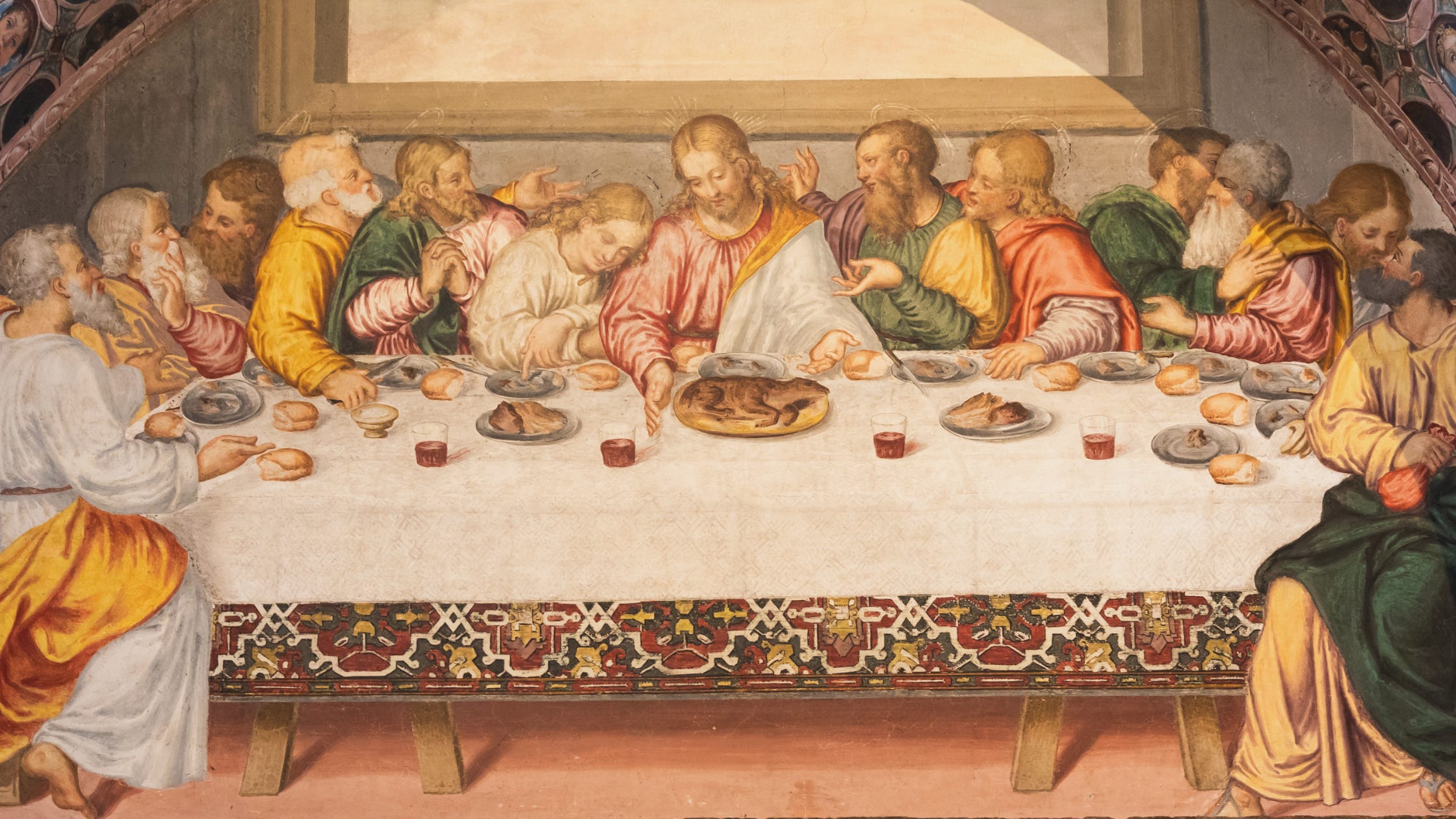
On the wall behind our table hangs a framed print of the Last Supper. There, we see Jesus reclining at the Passover table with his cherished apostles. In many depictions, this scene features John resting his head against Jesus’ chest in a position of complete receptivity and contemplation. His posture reminds us to contemplate, to recognize that the Thanksgiving table (and every table, really) is steeped in rich symbolism — particularly, symbolism that reminds us of three vital aspects of our spiritual lives.
On the wall behind our table hangs a framed print of the Last Supper. ... In many depictions, this scene features John resting his head against Jesus’ chest in a position of complete receptivity and contemplation. His posture reminds us to contemplate, to recognize that the Thanksgiving table (and any table, really) is steeped in rich symbolism.
Community
The Catechism of the Catholic Church tells us: “The human person needs to live in society. Society is not for him an extraneous addition but a requirement of his nature. Through the exchange with others, mutual service and dialogue with his brethren, man develops his potential; he thus responds to his vocation” (No. 1879). In other words, we’re not created to be alone indefinitely. Of course, Jesus often retreated from the bustle of society into the quiet of creation for prayer. Yet, this time was followed by love in action, a fulfillment of his Father’s will. After all, if we spend all our time in solitude, how are we to make a gift of ourselves? The loneliness of the mountain rejuvenates us for the neighborhood of the valley.
We see an expression of this call to community at the Last Supper. Jesus doesn’t confer with each apostle individually, sharing secrets or private predictions one-on-one. Instead, Jesus upholds Jewish tradition and gathers his beloved followers around a table for Passover. Jesus instructs Peter, “once you have turned back, you must strengthen your brothers” (Luke 22:32). Jesus knew that the apostles’ unique strengths played to one another’s weaknesses. They were a spiritual family, bearing one another up in love, encouragement, and virtue. Side by side at the Last Supper, the apostles received their vocation to build up the Church through love of one another.
The loneliness of the mountain rejuvenates us for the neighborhood of the valley.
Like the apostles, we’re called to build up one another in community: family, friends, parish congregations, youth groups, Bible studies, religious communities. Admittedly, this fellowship can be challenging because of the imperfections, vulnerabilities, and wounds of its members. Yet, we can treat Thanksgiving as an invitation to partake in and promote the mercies of God’s love. Gathered around the table, we’re reminded of our identity within the Body of Christ, his Church. It’s here that, as the Catechism teaches, we discover our vocation to love one another.
Side by side at the Last Supper, the apostles received their vocation to build up the Church through love of one another.
Like the apostles, we’re called to build up one another in community: family, friends, parish congregations, youth groups, Bible studies, religious communities.
Sacrificial love
This call to love one another isn’t confined to demonstrations of affection or kindness. Instead, it’s a call “to will the good of another” (CCC, No. 1766), to freely choose sacrificial love. At every Mass, we gather around the altar, “the table of the Lord, to which the People of God are invited” (CCC, No. 1182) and “the symbol of Christ himself … as the victim offered for our reconciliation and as food from heaven who is giving himself to us” (CCC, No. 1383). At the altar, we commemorate what Jesus reveals to be the ultimate expression of love: to lay down one’s life for another.
With the apostles, Jesus teaches us to “wash each other’s feet” through acts of sacrificial love. He calls us to get up from the table and minister to those around it.
The Last Supper offers us another vivid picture of this sacrificial love. John writes that Jesus “rose from supper and took off his outer garments. He took a towel and tied it around his waist. Then he poured water into a basin and began to wash the disciples’ feet and dry them with the towel around his waist” (13:4-5). The disciples are aghast at the sight of their master humbling himself in an act of servitude that many would find repulsive. Yet, Jesus calls the apostles to the same expression of love. He not only washes away the dust of their feet, but washes away their idea of what it means to be great and how they should give and receive love.
With the apostles, Jesus teaches us to “wash each other’s feet” through acts of sacrificial love. He calls us to get up from the table and minister to those around it. This ministry doesn’t have to manifest itself in grand gestures. Perhaps it’s helping prepare the Thanksgiving meal, clearing the table after dinner, donating to a local food bank, or visiting those who are sick or imprisoned during the holidays. In these ways, we echo the spirit of St. Thérèse of Lisieux by doing small things with great love. She assures us that, “Jesus does not ask for great achievements: only surrender and gratitude.”
Gratitude
As with sacrificial love, we turn to the altar to partake in the pinnacle of gratitude: the Eucharist. This sacrament is so named “because it is an action of thanksgiving to God. The Greek words eucharistein and eulogein recall the Jewish blessings that proclaim — especially during a meal — God’s works: creation, redemption, and sanctification” (CCC, No. 1328). At the Lord’s table, we recognize that Jesus created us for communion with him in perfect love. We acknowledge that Jesus sees us as worthy of redemption and thus makes this communion possible. We rejoice in the gift of sanctification through him.
Reflecting on the Last Supper, we bear witness to the moment Jesus presented this gift to us: “While they were eating, he took bread, said the blessing, broke it, and gave it to them, and said, ‘Take it; this is my body.’ Then he took a cup, gave thanks, and gave it to them, and they all drank from it. He said to them, ‘This is my blood of the covenant, which will be shed for many’” (Mark 14:22-24). Through the hands of the apostles’ successors, we receive the Real Presence of Jesus in the Eucharist. We receive all the graces and virtues with which he deigns to transform our hearts.
In recognizing the abundant gifts Jesus bestows on us, we lift our hearts in gratitude. We proclaim that “it is truly right and just, always and everywhere to give [him] thanks.” Always and everywhere — in the sun and rain, on good and bad days, for big and small things. Jesus gives us life, and we make a gift of our lives in return. Thanksgiving is a beautiful time to join hands around the dining table and name all that we have received: loved ones, charisms, homes, natural surroundings, possessions. Thanksgiving is also a perfect time to join hands around the Lord’s table and give thanks in the Eucharist.
This Thanksgiving, let’s strive to recognize the deeper truth, beauty, and goodness of the season. Let’s be inspired by the example of Jesus reclining at the Passover table with his apostles. Reclining at our Thanksgiving tables is the perfect place to nurture a virtuous community, a spirit of sacrificial love, and a grateful heart. We can start by supporting those to our right and left. We can start by recognizing the labor of love that is our Thanksgiving meal. We can start by thanking God for the food we receive and the loved ones with whom we share our space. After all, Jesus promises that “where two or three are gathered together in my name, there am I in the midst of them” (Matthew 18:20).
Thanksgiving is a beautiful time to join hands around the dining table and name all that we have received: loved ones, charisms, homes, natural surroundings, possessions. Thanksgiving is also a perfect time to join hands around the Lord’s table and give thanks in the Eucharist.
Grace is majoring in English and minoring in textual studies at the University of Washington. Her favorite places on campus are the Prince of Peace Catholic Newman Center and Suzzallo Library. She loves quiet visits with Jesus in Eucharistic adoration, time spent praying to St. Thérèse, and long drives that end in a forest. Her interest in writing, art, and paper goods has culminated in an Etsy shop, Graces & Glimmers, where she hopes to commemorate the daily gifts we receive from God and each other.
More from Caeli:


 | A guest post by
|
Community, self-sacrifice, and gratitude. Good reminders!